Not Interested in Being Nice

Photo by Anete Lusina on Pexels.com

To the people who’ve always done as they are told and who feel they have to sacrifice some facet of themselves in order to be liked or accepted: STOP.  I was like that.  I truly believed that if I was nice to people they would like me or give me what I want in return for me giving them what they needed.  I’d help people and go out of my way to get them what they needed hoping they would do the same.  Today was different.   

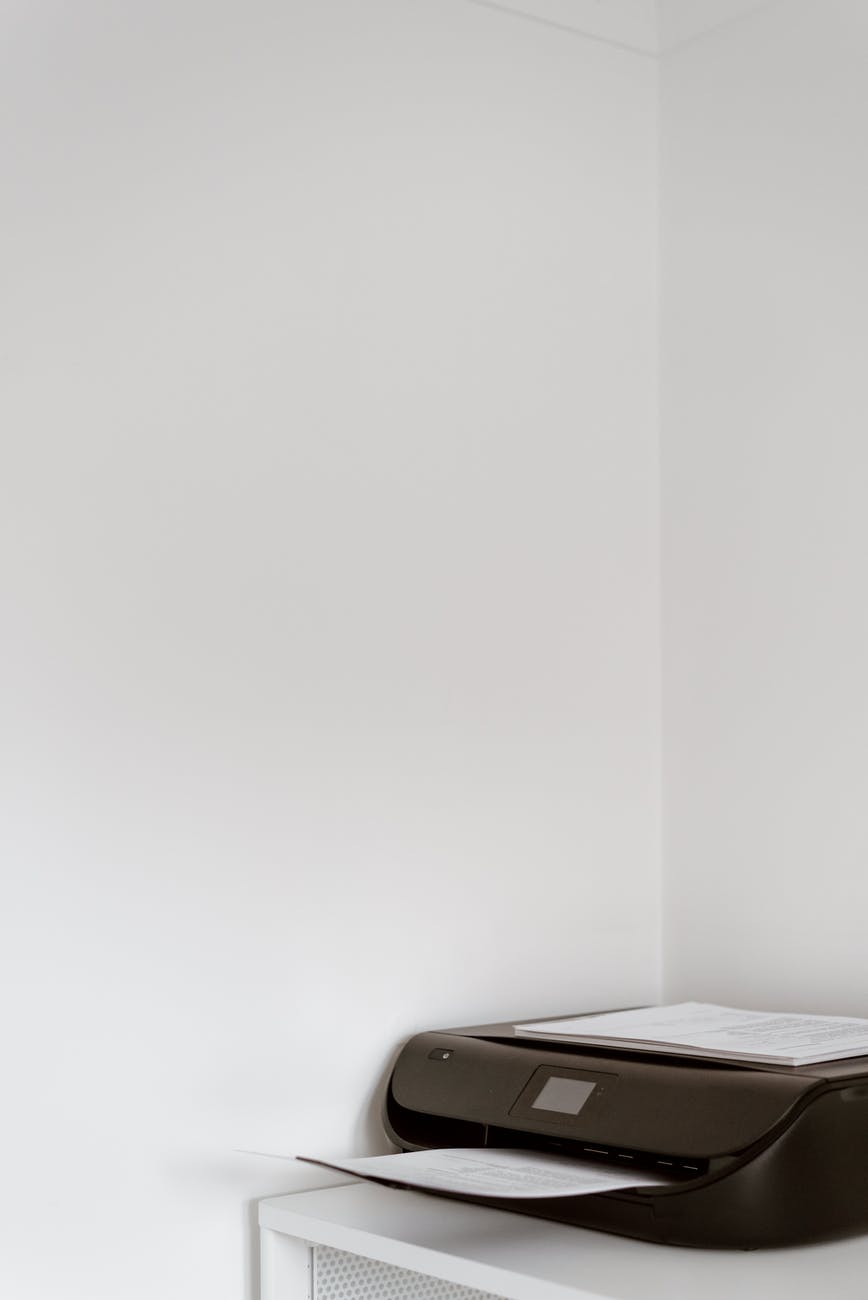
I got to work and, after the last week, I gave zero f*#ks.  Not that I didn’t care, just that I didn’t feel the need to ask permission or care what people thought.  I’ve worked there for 16 years and we’ve been going through a lot of intense stuff to say the least so my patience has admittedly been running thin.  Today a new kid took my papers off of the communal printer and threw them out.  I came out of my office while they were still printing and he had already thrown out two of my reports.  Seemingly innocent, could happen to anyone, I know, but that is a big no no with us because it is a shared printer.  Also pretty common sense to be honest—just because you don’t know what it is, you don’t throw it out without speaking to your management. 

Regardless, he pulled my reports out of the shredder bin and I told him, “We don’t ever throw anything off out of the printer.”  Simple, kind, to the point—no yelling and completely factual.  And that’s where it went downhill.  This kid looks at me and says, “Yeah, ok, isn’t there another printer to use?”  I told him as bluntly as I could that the printer is for everyone and it doesn’t matter, follow the team’s protocol.  I didn’t even give him a chance to question and I made sure he knew I meant business.  I can make allowances for people being stressed, learning a new job, feeling unsure.  But I have never had any employee speak to anyone, let alone a manager that way—not a good way to make an impression on the job.

See, part of self-love is self-respect and keeping the boundaries we talked about last week.  I’m no longer content to allow people to walk over me because they automatically feel entitled that they can.  For me, respect goes two ways and I am no longer sacrificing the receiving end of that respect.  In a work environment especially, I have earned my keep.  For a long time I would take it personally and wonder why someone would feel they have the right to speak to me that way.  Now, I don’t care what they think, you will NOT speak to me that way.  I used to be afraid that I would get in trouble for coaching an employee, but that is the definition of my job. 

Respect isn’t about being nice for the sake of being nice—it’s about doing what is right because you’re dealing with another human.  Everyone is afforded that right no matter how shitty your day may be or how off you feel.  And a personal bit of advice: don’t ever make assumptions about people based on how they look.  You never know who you are dealing with and that person may have the exact answer you’re looking for.  Most importantly, it isn’t selfish or arrogant to command respect—it’s a mutual feeling held for other people.

Where We Are

Photo by Luke Barky on Pexels.com

We took time at work today to discuss where we are at emotionally.  We’ve had one conversation like this before (I wrote about it a few weeks ago) and this time around it felt different.  The discussion amazed me because each of us views where we are at so radically different and we are on entirely different levels.  People deal with trauma differently and part of our group is dealing with it head on while the others are immersing themselves in work.  I see now, more than ever, that people are losing it and no one knows what to do next.  We are at our max—there is nothing else to give.  And it’s frustrating because we can speak this truth to all levels in our hospital and NOTHING is being done about it. 

We can no longer pretend our current state is normal.  We are being expected to behave as if this is normal and we are clinging to the idea that we can make this normal again.  We are being told to take precautions and that we can’t do certain things but we are expected to go about our lives as we always did—our mind has been in this sustained state of duality for too long and people aren’t able to cope with this any longer.  We aren’t designed to function like that.

On par with people losing it, I overheard a discussion in the lunchroom from other employees talking about how people who wear masks in their car alone are so stupid.  I’ll admit I struggled with that at first too because it seemed so unnecessary.  But two things: 1. There may be circumstances why someone needs to wear a mask in the car; maybe they share the car with an immunocompromised person or maybe they’re making a quick trip to the store; or maybe they’re so tired they forgot to take it off.  You don’t know what the hell someone is going through, so be kind.  What may seem silly to you may be necessary to them.  2. No matter what the reason they’re wearing the mask—it isn’t anyone’s business and it has 0 impact on other people, specifically you.   

We have lost all sense of what is really important and fixate on everything from an egocentric point of view.  We immerse and insert ourselves in other people’s lives and preach our opinions as truth (which they are—to each of us respectively) and criticize those who don’t live the way we do.  We spend time deflecting what we are really feeling and put it on other people like it’s their job to fix what is in us.  We are quick to place responsibility but slow to take it—even if it is for our own actions.  We look for power and control in every place we can when we feel weak or out of control in our own lives.  And people feel weak right now 

Right now I’m in a situation where people don’t want to take accountability because they’ve taken enough responsibility.  Right now they need support because they have given their all and aren’t able to sustain it any more.  They’re not given support if they don’t do exactly what they’re told and sometimes what they’re told is contrary to what they know needs to be done.  When you are in an environment that no longer suits you or that makes demands that you are no longer comfortable or able to meet, then it is time to consider what you are doing.

This year is about reinforcing boundaries and honoring what works for us.  Whether you’ve made that a goal or not, we are being pushed in that direction.  We can no longer treat each other as commodities or like our sole goal is to make money.  Our minds, souls, and bodies are calling us in a different direction, no matter how small the signs.  It is ok to let things fall apart because from that rubble we can rebuild something more honest. If it no longer serves, then follow your own path. That is enough to rebuild something honest for yourself.

Words Revisited

Photo by cottonbro on Pexels.com

I’ve spoken about the importance of language many times before and it feels the appropriate time to bring it up again.  When you are working for a cause, there is a certain way to go about getting people to support you and see your side.  I am an advocate for equality, no qualifications or exceptions.  I’ve been following a lot of feminist advocates and I’ve been edgy about what they’ve been saying.  I don’t like the expectation that we know something.  I’ve read repeated demands saying that they “aren’t here to teach us anything” and it’s “wrong to demand they do anything” and that “we have to do the work”.  I’m not arguing for a second that work needs to be done, but if I am asking specifically what you need and I need clarification, it is absolutely your job to specify.  If I don’t know what context you’re speaking of then how can I possibly help you get what you need?

The truth is there is nothing I “should” know.  My experience is not yours and vice versa.  What I DO know is from my experience.  What I want to know is my choice—and if I trust you enough to ask you what you need or to clarify something for me, then don’t pull the “You should know” card.  What I will know is what I act on—including asking for help.  No matter what your cause, don’t ever put yourself in position of “you are less than me” because someone is still learning.  And don’t make demands of them their experience can’t keep up with or integrate unless you are going to help them.  It doesn’t solve the problem in the former case. 

We have to know where we’re going and why you want us to go there with you—and ultimately, we need to know what your goal is so we can work toward it together.  It’s lazy to make demands with no explanation.  Your demands of what I must do to appease you don’t speak to the whole truth of the situation.  You’re perpetuating your misplaced anger and demanding I do the work without even qualifying what you want.  Because the system as it is doesn’t work so replacing it with a different group of people and still doing the same thing won’t fix it either.  We have to understand each other—and that is what communication is for.  It isn’t about putting power over someone or making them feel bad because they didn’t know better and didn’t know how to meet your expectation.      

The bottom line is that we all know there is work to be done—more than can be done in a lifetime.  But beyond who did what and why we feel the way we do, it’s more important to focus on where we are going.  Speak up, make your voice heard so we know we aren’t done yet.  But if someone is willing to help in any capacity, then don’t criticize when they get it wrong.  They’re still learning too.   

Sunday Gratitude

Photo by Susanne Jutzeler on Pexels.com

Today I am grateful to be able to make decisions.  I have often taken for granted the ability to make a decision, thinking that I could put things off until they happened naturally.  Life doesn’t work like that.  Over the last two years, I’ve had two employees become terminally ill and I’ve seen what life looks like on the other side of that diagnosis.  Having my health and the ability to make my life what I want it to is a gift.  Not taking steps that I need to now, when I have the ability is an insult to that gift.  For the last week, I’ve adapted my schedule to allow some time for a light workout in the morning and I’ve become even more rigorous with my diet.  Those are decisions I’ve made to appreciate my life. 

Today I am grateful to try to lean into what life is.  I’ve never hidden that I’m a control freak and a perfectionist (well, recovering perfectionist).  I’ve noticed as I’ve gotten older it has become harder and harder to maintain the standards that I set for myself—and I’m slowly learning to be ok with that.  Being perfect isn’t what life is about—it’s about the experience.  My husband woke up a bit late today, but he decided to make us breakfast.  I meal prepped after he cooked and we ate, played with my son and the dogs for about an hour, finished the laundry, we had a late lunch, got the car washed, did some last minute shopping and came home.  No plan, just what we needed to do.

Today I am grateful for new lessons.  I’m reading a new book about facing fears and even though some of the concepts aren’t new, it is fascinating to see how different people apply the same concepts.  In this book, she discusses finding and defining personal values.  It is in narrowing down my values that I see how much I take on—and why it’s challenging to commit and finish something.  Not that having values is a bad thing, but valuing so many things makes it more difficult to target your goals.  As a side note, I also really appreciate being able to connect with the authors I’m reading.  There is real value in seeing how someone lives their truth as well as how they came about their work. 

Today I am grateful to get out of my head by putting others first.  Both my sister and my boss have birthdays coming up so I took some time to buy them gifts and cards today.  I spent time helping my husband with some issues with his feet.  I spent time playing with my son—he’s in love with these Bend and Flex toys so we had an impromptu photo shoot. We are in the middle of another snow storm and my son and I spent some time outside catching snow flakes–and seeing his joy every time it snows is pure magic.  I haven’t been sleeping well and I’ve been getting overwhelmed with work because of the uncertainty in that environment so it was nice to NOT fixate on what was bothering me for those moments in time.

Today I am grateful for reminders that I’m capable of doing things on my own.  My husband was called into work yesterday and my son and I went about our business and I got some work done around the house and went to the store.  I was trying to find a small gift for my husband because he was so frustrated with being called into work.    I know that’s nothing abnormal, but I think we need to recognize as a whole how much work we do and how we are constantly trying to balance things that demand our attention.  Right now, it is a freaking miracle to get through a day with the weight we are carrying and we need to honor that.

Today I am really looking forward to sleep.  After more than a week of sleeping like crap, I’m so excited to rest tonight.  I know there’s no guarantee that tonight will be any better but I am so tired, that I’m preparing myself to put my head on the pillow and knock out.  I’m getting my diffuser ready and I’m going to have a super light meal and just relax.      

Wishing you all a wonderful week ahead.

Love and Other Emotions

Photo by Olya Kobruseva on Pexels.com

Yesterday’s post on love and language and Chapman’s work felt entirely contradictory to how I was feeling.  Not what I wrote about the book, but the discussion about how we feel and our standards and expectations when it comes to communication. I have a deep love for the potential we all exhibit and a profound anger for what we choose to exhibit.  I have a lot of confusion around human behavior and motive as well as the whole premise of systems and hierarchies. 

10 years ago I thought I had it all figured out and that the way things functioned made sense.  It felt like there was a sense of purpose, even amidst frustration and monotony and the occasional outburst, it felt like I knew my role and what I was doing.  Slowly I noticed that even when I did what I was supposed to, the results I expected didn’t show.  With more frequency, I noticed that most of what I expected didn’t happen.  Then I noticed that greater demands for less return were becoming the norm.  And, really, that has worsened year after year.  It felt like no matter what I did, I couldn’t get ahead.  And for the last four years, we watched as each system revealed itself for what it really is: a machine designed to keep the rich rich and the disenfranchised unable to catch up.

Then last year the entire world was turned upside down—and we were given the choice to protect our systems or protect our people—and we’ve been living in that state of awareness with no direction to change it for over a year now.  At work yesterday, while driving, while in the store—pretty much everywhere—I felt incredibly angry.  All around me, in spite of what we have experienced in the last year, people are still so entitled.  I can’t fathom for anything how people can still feel they have the right to make any kind of demands resembling anything close to where we were.  The sheer arrogance of people believing that they have any say in what happens anymore is insane.  The delusion that this goes away because of a vaccine.  All of these things feel like living in the Twilight Zone. 

So, with this much frustration and anger, how do we still find and express love?  I found myself not in the least bit willing to figure out what people needed—and I know now that it has to be a boundary for me.  When people make demands out of fear, they are angry and irrational and I refuse to be part of the problem of giving into people who aren’t rational.  I refuse to give into people who forget what we are all going through right now and remain so self-centered that they can’t see what they’re doing. 

I also know that a boundary for me is that I can’t spend my time telling other people what they’ve done wrong—I’m not the behavior police.  But I know with both of those boundaries that I don’t have continue to expose myself to those situations.  Making demands on others isn’t love—it is suggesting a hierarchy and that their perceived needs are more important that you.  I know that the most loving action I can take in those situations is to walk away because I would not contribute anything of value in those cases.  I respect where other people are coming from because in healthcare, everything, every emotion is heightened.  But I do not respect people who demean others or degrade and disrespect them in an effort to get what they want.  No one has to tolerate that. 

Love and Language

Photo by Skylar Kang on Pexels.com

I wanted to share some of the books I’m reading to start discussion on what I’m learning.  I read Gary Chapman’s “The 5 Love Languages: The Secrets to Love That Lasts.”  The book is highly recommended for relationships so I figured I would give it a try.  Chapman discusses how relationships can be improved through communicating with our partners in a way that suits them. 

I feel the premise is valid—communication is about creating mutual understanding and the easiest way to do that is to communicate in a way a person understands and is familiar with.  It makes them feel heard, understood, and validated. 

As much as I agree with that statement, I find myself annoyed that the book sets the expectation that you have to know how to talk to everyone.  There is no personal accountability for other people’s expectations—only that we will behave and speak in a way that makes sense to them.  Now, to be fair, the book doesn’t overtly suggest that, but some of the stories shared are fairly archaic.  Like a couple from a small mill town where the husband wants to work and hunt and he expects his wife to have dinner ready when he gets home and a clean house and a perfectly clean child. 

I don’t feel like anyone should ever have to meet the demands of their partner—helping to meet needs is a different story.  Relationships need to be about give and take and sharing the load whether it is emotional or physical.  Sometimes I get overwhelmed mentally so I need my husband to help me take care of our son or he needs to cook dinner.  But to demand that someone change or do a certain thing to show love is unrealistic.  Sometimes I think we have to learn to accept that people show love in a different way—not that we need to adapt every time they have a feeling.

Relationships are about understanding—and this book is great at setting that foundation—but I feel it should be more about understanding where we and our partners are coming from.  Level set early on and then you can decide what your relationship looks like and how you will make it work.  A relationship isn’t about deciding how you want your partner to behave—it’s about how you behave together and what you are working toward.  It’s always a mutual thing.

I recommend the book for a deeper look at communication in general because the theory/process really applies to more than just romantic relationships.  I took a lot of it at face value (which is probably the intent with this type of work) because, as I mentioned above, some of the stories can be outright infuriating with their implied oppression of “how things should be.”  If anything, read the book because we all need a little improvement with communication—you can’t go wrong there.

Seeing it Again–Where the Pressure Really Came From

Photo by Barbara Webb on Pexels.com

I used to think that the pressure in my life was from proving myself to my parents and maintaining a standard they set for me.  They always praised my grades and the events or clubs I partook in.  I loved it when they showed me off and when they talked about how smart I was.  They were always expecting the next great thing from me and wanting to see how far I surpassed myself. 

I know now that they were also feeling enjoyment in their pride and relief that I managed to do well with school.  I strove to maintain that level of esteem from them for as long as I could.  Their pride in me was like a drug and it made me feel like I was capable of anything.  I wanted more.  With good grades, I felt like I could take on the world.

My sister and I used to talk about how frustrating it was to have that pressure on me and she had a tendency to emphasize that it wasn’t my inner drive that went for perfection, it was my parents pressuring me.  The more I think about it, I honestly never felt pressure from my parents.  They never scolded me if I did something wrong or if I didn’t get a perfect score.  They were actually incredibly supportive if I made a mistake.  But they also didn’t go out of their way to make me feel like mistakes were ok or a natural part of learning.  And the attention I got was different when it came to a mistake versus success.      

In spite of all that, I couldn’t pin that this is where the pressure came from.  I’ve been having nightmares a lot lately and a lot of memories coming up.  I woke up one morning after it had snowed and I started thinking about how some people really have a hard time driving in those conditions and I felt myself getting increasingly angry.  Then I remembered getting into an accident in the snow when I was 19.  I remember the sound of the tie rod breaking and sliding into a street sign.  I remember an incredibly sweet woman stopping and asking if I needed her phone.  And then I remembered the aftermath, being terrified to drive in the snow.

Stick with me, because I realized that the pressure came from trying to keep up with my siblings.  When I was little, I always wanted to be with my sister.  I wanted to do everything she did, I wanted to be her.  After that accident, I panicked and asked for my family to help by driving me when I was really uncomfortable—like in fresh snow. I had been picking up my sister from the train station for months and I figured she would help me.  One nasty snow after the accident, she was taking me to class on campus not too far from home and she was pointing out every five seconds that her car slid too and telling me that I needed to learn to get over this.  It really hurt me and embarrassed me and it made me feel like I couldn’t rely on her.  Then it really hit me: I had been driving for almost two years and she had been driving for over 11.  She was holding me to her standard when she had five times the experience I did. 

Then I started remembering her making snide comments about not getting number one in class—while at the same time telling me that I had to let go of the perfectionism and that she was worried about me.  We had a complicated relationship—like most siblings if I really think about it.  She told my secrets to my parents and to my aunt—including the first time I had sex.  I kept everything she ever told me and she told the darkest parts to those closest to me.  But I envied her.  So I know the pressure wasn’t directly from my parents, and reading these stories, maybe it wasn’t even from my sister.  I put that pressure on myself.  I thought I was a failure if I couldn’t get something right the first time.  I hated myself for it and I even thought I was never meant to do certain things if I couldn’t get it right immediately.  Worse, I started holding people to that standard as well.  Completely unfair, I know, but I grew up with the people I looked up to expecting me to get it right because there was no room for error.  I know I can’t breathe like that, so I am letting it go.  This month is about love and I am practicing loving who I am—including where my neuroses came from.  Make friends with what I can’t change, and relieve some of that pressure.   

When Those We Love Hurt Us

Photo by Gabby K on Pexels.com

I believed for a long time that family would never let me down, that they would always be there for me, and that they would always do the right thing.  I grew up with siblings a lot older than myself and I believed they would always protect me.  I honestly believed that anyone older than me would do the right thing.  I’m not 100% sure when I learned to think like that, but I know I did. 

Some parts of this are challenging to tell because I’m not sure how to articulate it, but I never learned to build up my defenses.  No matter what my family did, no matter what they did to chip away my trust, I always dove fully in and trusted them again.  Meanwhile any little mistake from people around me and I cut them out like a wart that overstayed it’s welcome.  I don’t know, maybe it was a guilt reflex.  My parents and siblings took care of me so I felt they were allowed to treat me how they wanted to, even if it hurt me. I always believed I was the accident of the family and that it was some huge sacrifice to bring me into the family.

I tolerated lying, mental abuse, being forced to grow up way too soon, becoming a therapist for my parents, being ostracized from my siblings, and bearing the burden of proving myself because of our age differences.  It takes a huge toll on your self-esteem when the people you want love and respect from see you as someone weaker than they are and prey on that.  It’s so hard to acknowledge the hurt that it brings but to also understand that they were just of a certain age where that behavior is natural—it wasn’t necessarily anything personal.  It’s a fight between logic and what you feel. 

It wasn’t until very recently that I understood that no matter who they are to you, family or not, there are things you can put your foot down with even if it makes them uncomfortable.  Familial relation or “hierarchy” doesn’t matter: you’re allowed to say who has access to you.  It also wasn’t until very recently that I understood how messed up some of the things I went through really were and that, family or not, sometimes cutting people out is necessary.  

I have a complicated relationship with my mother as well.  She had a traumatic childhood and she has a lot of unresolved emotions about it.  As a result she hates being told what to do (but doesn’t know what she wants to do when she isn’t told what to do) and she will tell you what you want to hear and then do what she wants to do.  She takes care of my son and he has dietary restrictions that, when I tried to enforce, she would tell me she would stick with it, but then I would find out she gave him things he’s not supposed to have—because they can hurt him. She told me once that it wasn’t a lie if I found out about it. 

There are some things we have to learn to accept in people around us.  some things they just won’t change.  We can choose to set a hard boundary and cut those people out of our lives or we can learn to tolerate the behavior, or accept it.  In spite of all the things my family did, I love them.  There are things I can forgive because I know they didn’t know any better.  For the things that are a hard boundary, it can be a challenge to enforce them, especially when you’ve never had to do that before. 

I often ask myself if it’s possible to have a close relationship with people who have broken your trust.  Clearly it is on some level because these people are still in my life and I still speak with them, I still share with them, and I still love them.  But I am always guarded around them.  I always measure how much to say and what they need to know and, at the same time, I am learning what is appropriate to open up about.  I used to vomit everything about my life to people as soon as I met them and I have learned to guard that a bit more.  It wasn’t appropriate and I got hurt more often than not.  So I try my best and I continue on and I have learned to integrate those lessons from my family as a way to protect myself.  No matter how much we hurt, we still have a capacity to feel love and that is the gift. 

The Part of Valentine’s Day I Didn’t Talk About

Photo by Rachel Claire on Pexels.com

I’ve been back and forth for years on how to handle my relationships, particularly my marriage.  I’ve been with my husband for 20 years this year.  We’ve grown up together, we’ve lost together, we’ve won together, we’ve loved hard and fought harder.  When you’re in anything long term, it’s easy to get frustrated with things…like, everything.  I mentioned about a month ago that we have been seeing things differently and I’ve felt that building up. 

I woke up on Sunday feeling like I had a choice: accept that we are on different paths and learn to separate and end this knowing we both have things we want to do.  I don’t want to feel trapped waiting for someone to be on the same page as me. The other option is to lean into my flexibility and my adaptability and fully believe, in spite of our differences, that we are heading somewhere we are meant to be together.  I’ve spent so much time fixating on what HE needs to change and my vision of the future that I never looked at where I needed to be willing to bend.

I also often forget that my family has a long history of martyr syndrome: we like to pretend that we are the victims, the ever-holy self-sacrificing angels there to save our loved ones.  We’re pretty good at it—like, I think we may have brought it over when my great-grandmother came here from Italy and shared it as an ancient family secret.  It drives me INSANE, both to experience it and to recognize that I do it as well—even though I hate it being done to me.  Sometimes I cling so desperately to my vision of how things should be that I completely lose sight of how others may feel or what they want.

For every aspect of my relationship that I’m tired of and “over,” there are so many other facets that I appreciate.  I struggle with being the fiscally responsible one, the one who has to say no to everything because I’m looking out for our future.  But my husband does help in his own way.  I definitely wish he would contribute in the ways that take some weight off of my shoulders, but he does important things for our family. 

After really thinking about it, maybe the choice wasn’t about staying or going—it was about letting go of my bullshit stories and expectations and own that THIS is who I am.  I need to stop controlling what I want other people to do and accept my role in this.  For example, I love a clean and organized house—but I hate maintaining it.  So sometimes things get really disorganized and it makes me anxious, but I know those times I let things get messy, I’ve spent time with my kid or I’ve been working on things that I want to accomplish.  It has been my flexibility and adaptability that I need to work on.  Life can be so much more enjoyable when you let go.  When you align with who you are and what you really want.  A gift I gave myself on this Valentine’s day was to promise to connect deeply with who I am, to be honest with every facet of myself, loving me, not apologizing for the life I want, planting both feet firmly on my path and never looking back.  I came to terms with the fact that I need to see what’s on the other side of my control and fear.  If I want to see what I’m capable of, then I need to give myself that chance.  Happy Self-Love day—which can be any day 😊   

It’s All About….Support?

Photo by Karolina Grabowska on Pexels.com

In the vein of self-love, I thought it prudent to talk about early lessons in self-love–that you don’t always learn it from your family. While this story may not apply to all, the lesson does.

I got my first bra at 11 years old.  I remember walking into KMart with my mother and shyly heading into the girls underwear section.  It felt almost obscene to observe these garments that I had only heard about wearing a couple of years before.  I felt like it was all happening too quickly, like I shouldn’t be looking at these things or shouldn’t want them.  I looked at the different styles, the designs on the fabric jumping out at me.  I wanted the pretty floral one but my mother selected a few plain white ones from the rack that she thought would fit my own growing rack.  Instead of coaching me through the experience, my mother told me she was sorry she passed on her curse to me.  I didn’t think much of it at the time other than now I had new clothing to keep track of. I remember being a little excited because I felt like my sister and thought we would have something in common.

 After we left the store, I remember proudly showing my best friend’s mother that I acquired this new garment and feeling like I had a new secret all to myself.  I was conflicted by my mother’s reaction because she taught me to be ashamed of my changing body and to not trust my choices but I was honestly a little excited. Like I mentioned, I thought it would bring me closer to my sister and I wanted to trust my body.

Every time I needed to expand my bra size—which was fairly often as my mother did pass on her ample assets—she would apologize to me.  She would always tell me to be careful with the clothes I wore or she would tell me she would never have the confidence to wear the things I chose to wear.  She would get me the plainest, most non-descript underwear and act like I needed to be ashamed of it.  As I continued to grow, I would allow myself to spill over (literally) because I didn’t want to tell her that I needed another size bigger, yet again.  I couldn’t believe that I was still growing so fast.   By the time I turned 13 I was a 36DD and I started to feel like I might have to be ashamed of myself and that I might need to keep my body hidden.  None of my bras fit me and I was always uncomfortable in my own skin.  Nothing was supportive about this new undergarment anymore.

This pattern started to bleed over into other areas on my life.  I wanted to sing and I was told, “I wouldn’t be brave enough to do that!” I wanted to go out with my friends and I was told, “Make sure you’re careful and that you’re home on time!” I stayed awake about half an hour longer than normal and she told me, “You better make sure you’re still awake on time!”  Every time I wanted to have a normal life or try something new, I was met with statements like that encouraging me to always use caution and to never just go for it and trust in myself.  The only praise I got was when I turned in good grades and when I did exactly as I was told.

I honestly don’t fault my mother as she was raised to be extremely cautious and any mistake was met with ridiculous hostility from her own mother.  I see this now as I have gotten older.  I also see that without the support I needed from her to encourage or foster taking chances that could open doors, I remained timid when I needed to stand out.  I hid my body and I hid my talents because I didn’t want to stand out if I wasn’t perfect.  I picked friends with bold attitude and ambition and I found myself telling them that I wouldn’t be brave enough to do the things that they did.  I married a man who did anything he wanted to do without consulting me and when I took a chance, he all but laughed at me (this was many years ago).

Now that I have been looking at my life a little more in depth, I have to admit that I am still looking for support.  I have come to realize that the patterns instilled in me from that fateful first shopping trip with my mother have taught me to attract a certain kind of person in my life.  I have continually attracted people and situations that always demand the best from me but don’t return anything but the bare minimum.  I have kept myself out of the limelight while performing at the highest of standards and I have allowed people to berate me and belittle me for the smallest mistake while allowing them to take credit for work that I have done and I have praised them for doing next to nothing.

I sometimes have a hard time accepting what I know because I want to believe that those we love will always have our backs. The truth is if the support systems in your life aren’t working, get rid of them.  Whether it is an unsupportive partner or a bra that doesn’t fit, there is no room in your life for things like that.  Take the time to love yourself enough to speak to what you need and to demand the right support.  Life is too short to diminish your greatness because you’re carrying any unnecessary weight, whether it is on your rack or your back.