
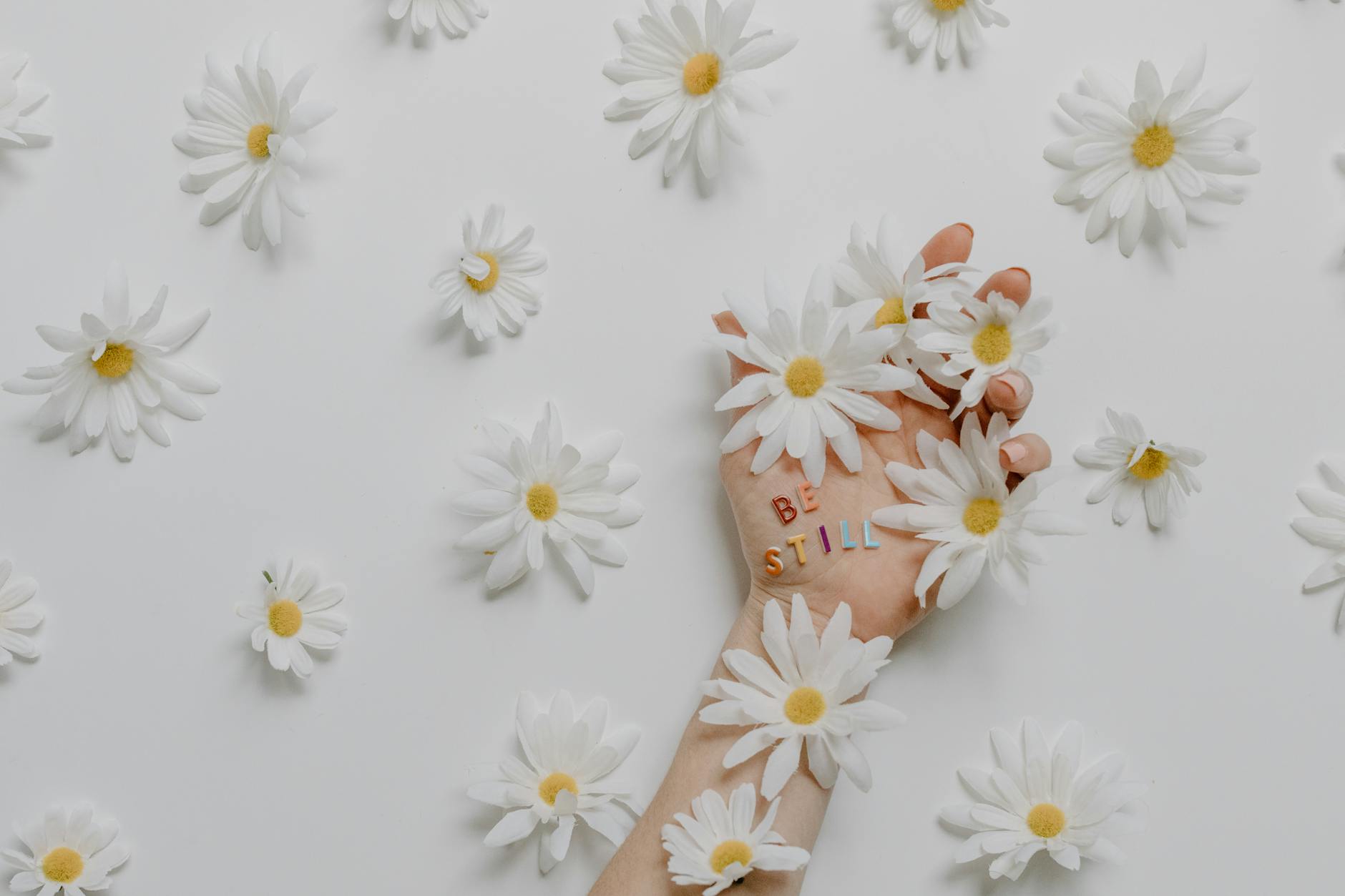
I can’t speak for everyone but I believe we all need reminders of faith every now and then. I feel compelled to share a little bit about my spiritual journey at this point. After such a tenuous relationship with faith, one where I didn’t trust myself, I see where it is a test. I didn’t trust ME, let alone anyone else or a higher power. But there’s something in connecting to that inner voice, the knowing that quiets the fear. Just deciding. In choosing to give up power/control, I’m gaining insight to the next steps. What I like. Who I am. I’m working on accepting that’s what God wants—the surrender and trust that all is ok. Instead of the mental/emotional/sometimes physical gymnastics of trying to contort myself into something I think others want, I just need to listen. Be present. Sit with the words and don’t worry about MAKING the words. Like, we need to sit and hear what is being told to us rather than running with that inner voice where we think we are hearing guidance but really it’s the same drivel droning on that keeps us doing what we’ve done every day: fighting for control. When we hear actual guidance, we understand that we are made, we don’t need to make ourselves. We make the lives we are meant to have, yes, but even that comes from the gifts we are given. So, I’m learning to make my life by hearing and healing and using the gifts He gives me. It’s been a process to get here, and I feel it’s an important one to share.
I’m still not a religious person. No matter the controversy this may cause or how much I’ve learned on my journey, I still personally believe religion is man’s work, not God’s. That isn’t to say I’m against groups coming together to share faith and belief and find connection to each other and a higher power—quite the contrary. I feel all those things are entirely necessary in life. It’s something I’ve sought in my life. I never wanted to fear God and the truth is, as a child, I know I didn’t. I had an innate knowing of my relationship with a higher power and I felt comfortable simply being myself. It wasn’t until I was introduced to certain religious practices/beliefs of others that spoke of how bad we are, how sinful we are, how we need to beg forgiveness that I started to question the point of religion. I never understood how someone could look at me and make those judgements—and it was judgement–because I NEVER felt that way as a kid. I NEVER questioned if I was loved or if I was doing something wrong in the eyes of a higher power. I always felt accepted. I was taught to question that and it didn’t feel right. It was other people who made me question not only my connection, but they made me question that belief as well as question myself. It was those doubts that made me see the flaws in organized religion early on.
I loved hearing stories of faith and belief and knowing that there was an element of design in our lives that we had the ability to tap into at any time. And if we managed to tap into it? The entire possibility of creation, joy, love, and peace would be open to us. I thoroughly believed in the concept of co-creation before I even knew what it was. It FELT right to me. I never believed I had to prove myself to God. But once I started doubting that, I lost hope. When things started getting rough for me and I couldn’t find that support, I lost even more. The truth is, I have been witness and I have personally experienced enough alignment in my life to know that it was more than just coincidence. There are events in my life that can’t be explained as anything other than a miracle—there would be no feasible way for these events to have taken place without divine action. So how did I continue to let myself doubt/let that doubt creep in? Because I lost faith in myself. I took up the belief that I needed to do everything on my own. That if I made a mistake of any kind I wasn’t worthy of good. When tough times happened or I struggled with something, I convinced myself I deserved it. But it never failed that when I hit my lowest, even cursing God directly, something would happen to show me His existence—or that something existed. That fact that I/we exist is enough testament to that as well.
 The Intentional Dreamer