
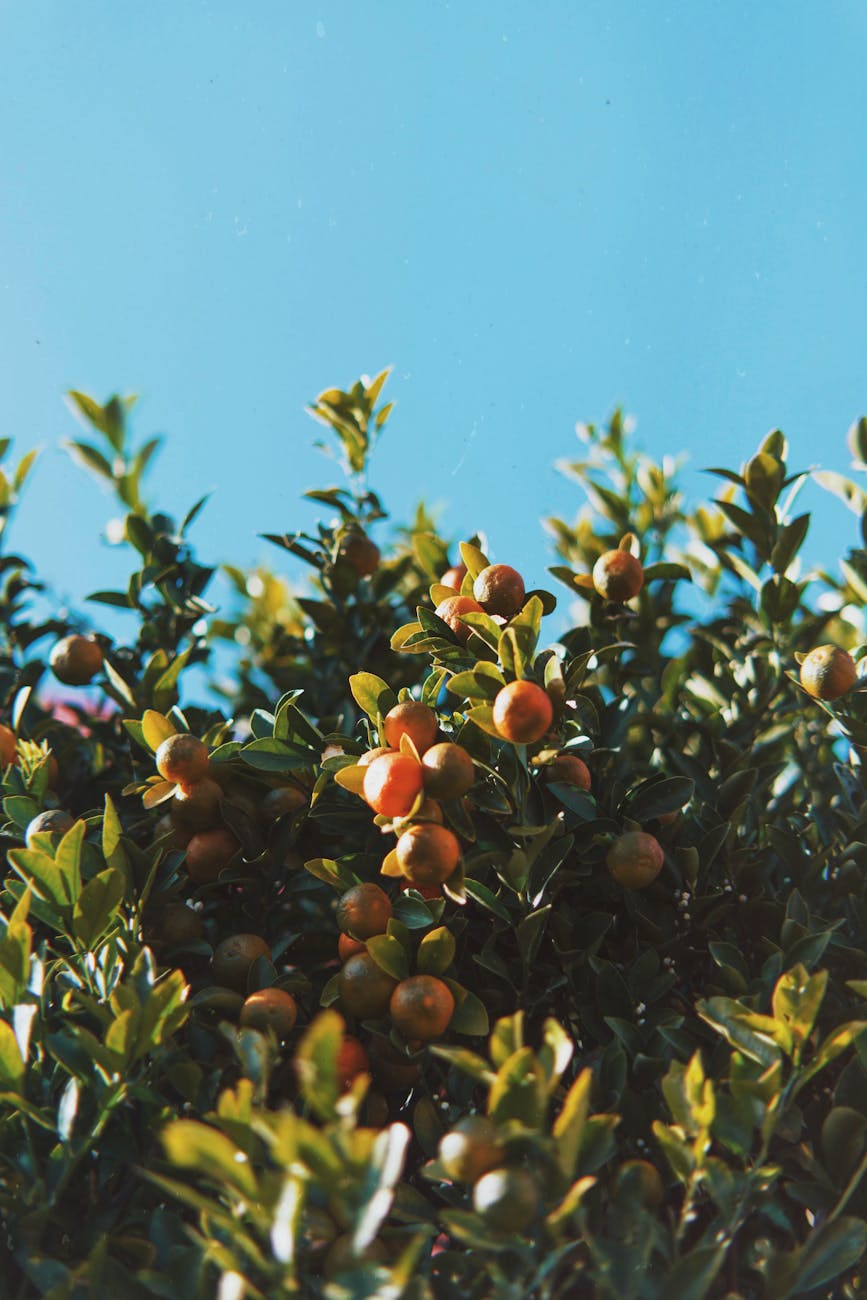
I was watching a cartoon with my son the other day and one of those realizations flashed through my brain. One of the characters finds a way to produce a food that everyone seems to love so she injects her tree with a type of fertilizer to force it to produce more than it normally does. Meanwhile there is a shaman that advises the other character that she needs to stop and appreciate the relationship she has with nature and to appreciate what is being given to her. He even advises something along the lines that you get force too much [fruit] off of one tree, you may need to divide the job amongst several others. She doesn’t listen and eventually kills the tree. Her source dries up because she didn’t appreciate it, she didn’t listen to advice to stop, and she didn’t respect what it was capable of (its own timing and productivity). How often do we do this? Push and force ourselves, those around us, and yes, even our food to be more, to do more? It isn’t healthy. It isn’t how to yield the best results. We need to respect ourselves, our ability to produce, our timing—and maybe delegate some of that responsibility to others so we can all carry the load to produce the best outcome for all.
We are trained to believe that if we don’t do it all on our own that we are somehow less than…something or someone else. That somehow the work we do isn’t worth as much if we needed help or if we needed to take a different path than others to get where we wanted to go. There are so many ways to achieve things in this world and none of them has been deemed right or wrong (with the exception of hurting other people or things for personal gain—I think we can all agree that’s crappy). When we were fighting for survival (literally fighting, like in cave-man times), the only thing that mattered at the end of the day is if we lived. Didn’t matter how, but if we survived and we were unscathed and we could go another round, it was fine. As we evolved and became more and more adept at manipulating our environment, something shifted and we thought we needed to get specific and tell people how to do certain things—and we assigned a value to it. We lost sight of the inherent value in everyone and what they could do. We thought control meant that people needed to do the same thing in the same way or it was somehow not worth as much. All that served was a system. We made ourselves and others part of the same system so we could understand what was “worth it.”
It’s quite simple: the more we force things to be a certain way, or the more we force something to do more of what it already does beyond its natural capacity, it becomes destructive. We pretend it’s under necessary to produce more and more and to be more and more instead of respecting who, what, and where we are. We have a lot of talent and a lot of good that we can give this world and it doesn’t have to live up to anyone’s standards. In some ways, yes, this is simply about being enough as we are. But it’s also about respecting nature—and we are a part of nature—and appreciating what we have, what we can do, and what the natural world provides. We don’t need to manipulate anyone or anything to do something it doesn’t do naturally (or to do more than it does naturally). We are all part of nature and we all have our own rhythm and we are meant to follow it. The closer we align with what we naturally are, with what we naturally feel, and our natural capacity, the better we feel—and the more we can produce. It isn’t our job to force more or to produce more—that’s an industry and capitalist thing. We know we want to live according to the natural rhythm of the world, and the world feels better when we do so. Don’t allow our source to dry up because someone put an expectation on us. Be who we are and honor the pace we live. It all comes in its own time.
 The Intentional Dreamer